- How Employee Monitoring Affects Engagement, Trust and Employee Wellbeing
- Employee Engagement Is a Management Issue, Not a Happiness Score
- What Research Says About Employee Monitoring and Engagement
- Why Employee Monitoring Can Damage Engagement
- When Workforce Data Can Still Help Employees and Managers
- Do Not Measure Engagement With Computer Activity Alone
- A Practical Framework: Signal → Context → Conversation → Action
- How to Monitor Employees Without Destroying Trust
- How INSIDER Supports Work-Pattern Analysis
- Employee Monitoring and Privacy in India
- Before You Roll Out Monitoring: 10 Questions for Management
- Conclusion: Use Monitoring to Ask Better Questions, Not to Automate Judgement
How Employee Monitoring Affects Engagement, Trust and Employee Wellbeing
Employee engagement remains a significant management challenge. Gallup's State of the Global Workplace 2026 reports that only 23% of employees in India were engaged at work in 2025, while 59% were not engaged and 18% were actively disengaged.
At the same time, remote, hybrid and digitally managed work has made employee monitoring easier than ever. Organisations can track working hours, application and website usage, active and idle periods, schedules, screenshots and other elements of the digital workday.
This raises an important question: how does employee monitoring affect engagement, trust and employee wellbeing?
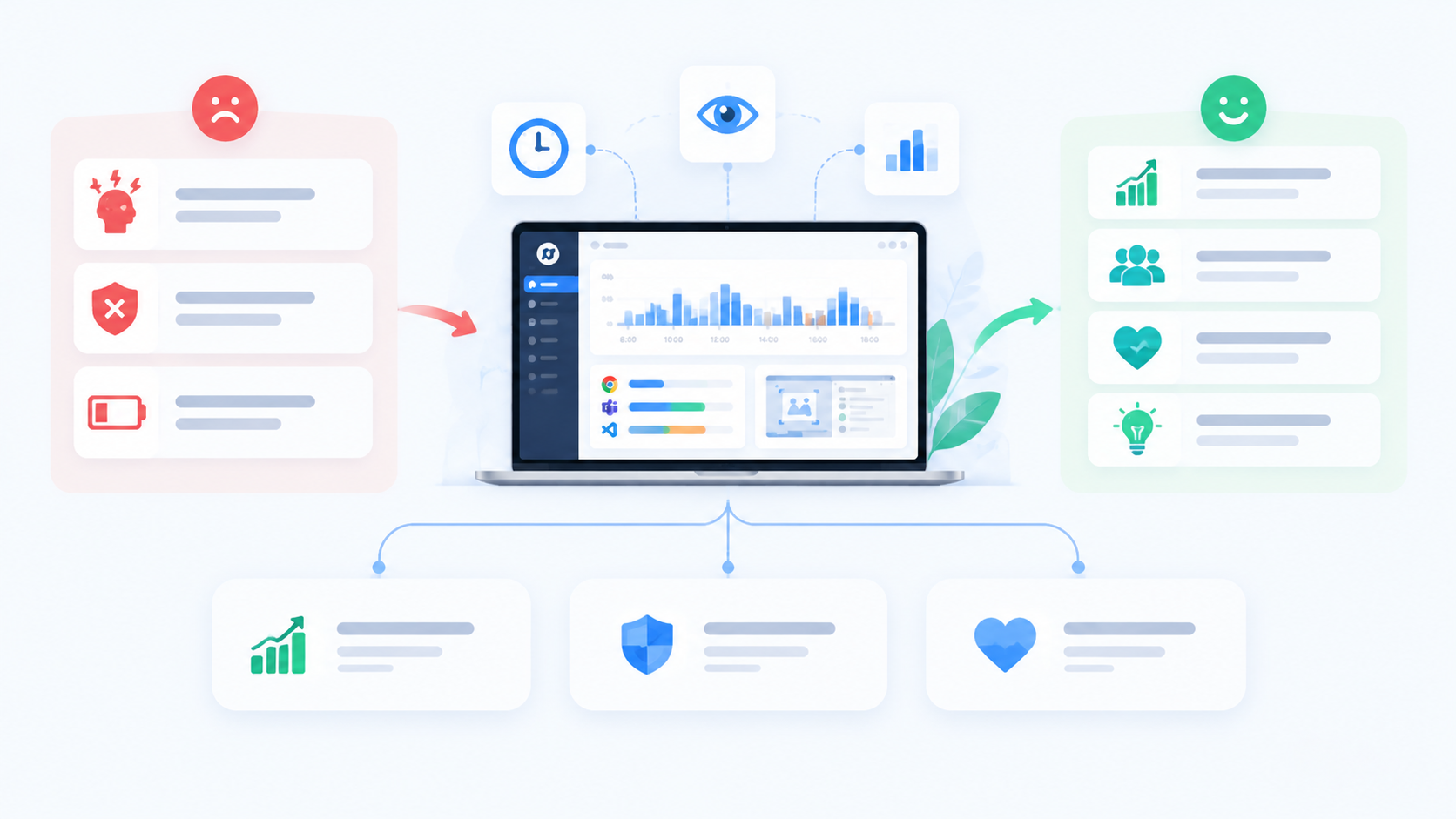
Research does not support a simple answer. Monitoring does not automatically improve engagement, productivity or job satisfaction. When employees experience it as intrusive surveillance or as a signal that management does not trust them, it can increase stress, reduce autonomy and weaken trust.
However, workforce data can still provide useful operational context. When monitoring is proportionate, transparent and linked to a clear business purpose, it can help managers identify sustained overtime, workload imbalance, inefficient processes and recurring work patterns that deserve attention.
The key is to avoid treating monitoring data as a judgement about the employee. Computer activity cannot reliably determine whether someone is engaged, motivated or performing well. Its more useful role is to provide evidence about specific work patterns that can be considered alongside employee feedback, tasks, deadlines and business outcomes.
The goal is not to replace management with monitoring. It is to help managers ask better questions.
Employee Engagement Is a Management Issue, Not a Happiness Score
Employee engagement is sometimes confused with employee happiness, but the two are not the same.
An employee can be satisfied with colleagues, salary or working conditions while feeling disconnected from the organisation's goals. Another employee may be highly committed to their work while going through a demanding period that temporarily affects their wellbeing.
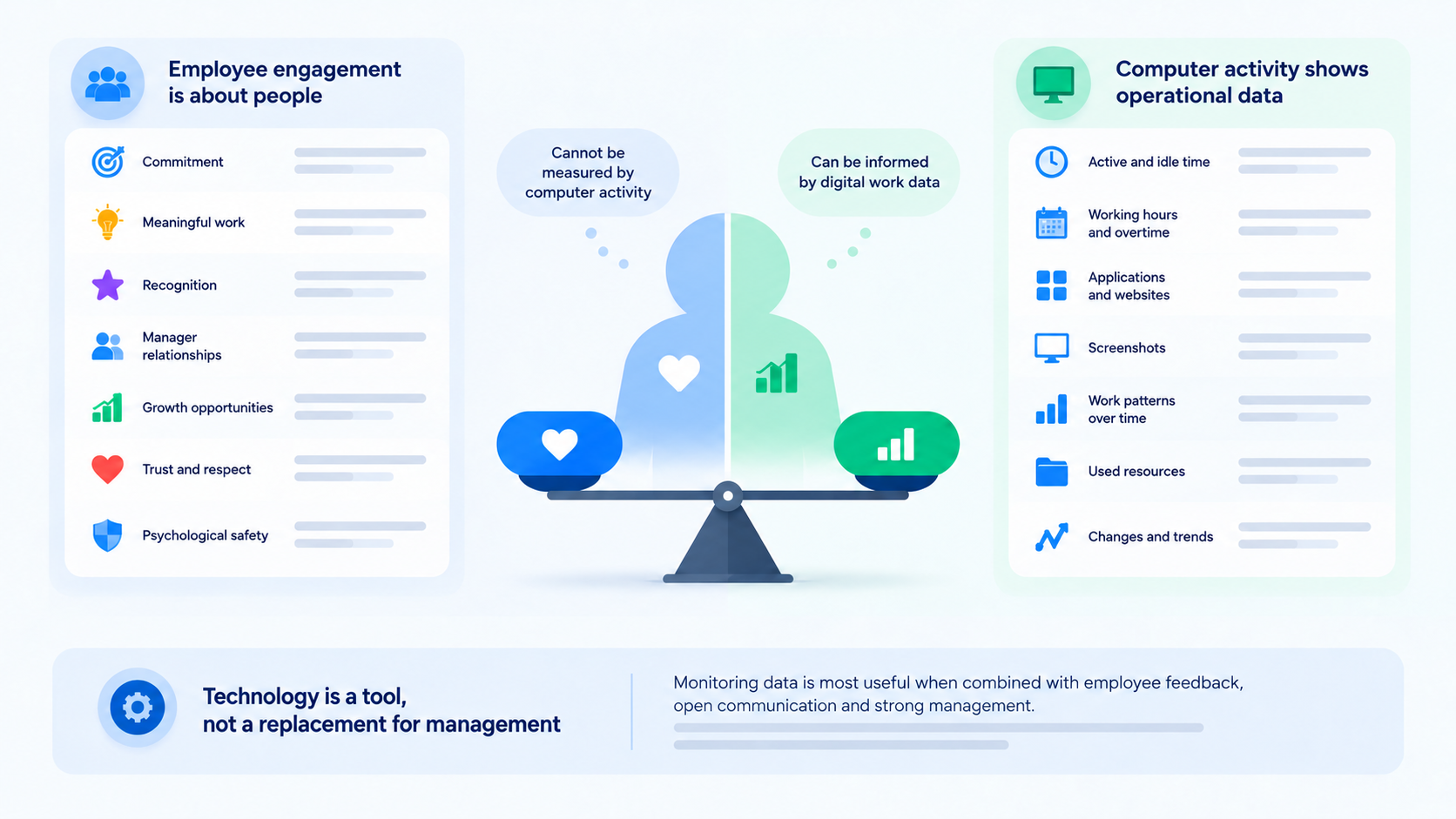
Engagement is better understood through factors such as commitment, clarity, meaningful work, recognition, relationships with managers, opportunities to contribute and the ability to perform effectively.
That distinction matters when discussing employee monitoring.
Computer activity cannot tell a manager whether an employee:
- believes in the company's goals;
- feels respected;
- trusts their manager;
- wants to stay with the organisation;
- is proud of their work;
- feels psychologically safe;
- is experiencing burnout.
Those questions require employee feedback and human conversation.
Digital work data answers different questions. It can show when activity was recorded, whether overtime is recurring, how the digital workday is structured, which resources are being used, where idle periods appear and how patterns change over time.
Problems begin when organisations confuse operational data with engagement or performance. Eight hours of computer activity do not prove that an employee is engaged, just as a long idle period does not prove disengagement.
Monitoring data is most useful when treated as one source of operational context rather than as a standalone measure of employee attitude or performance.
Technology cannot compensate for weak management. Better dashboards do not automatically create clearer priorities, stronger communication or more supportive managers.
What Research Says About Employee Monitoring and Engagement
Employee monitoring is often introduced with a practical objective: improving visibility, accountability or productivity.
However, academic evidence does not support a simple assumption that more monitoring produces better performance.
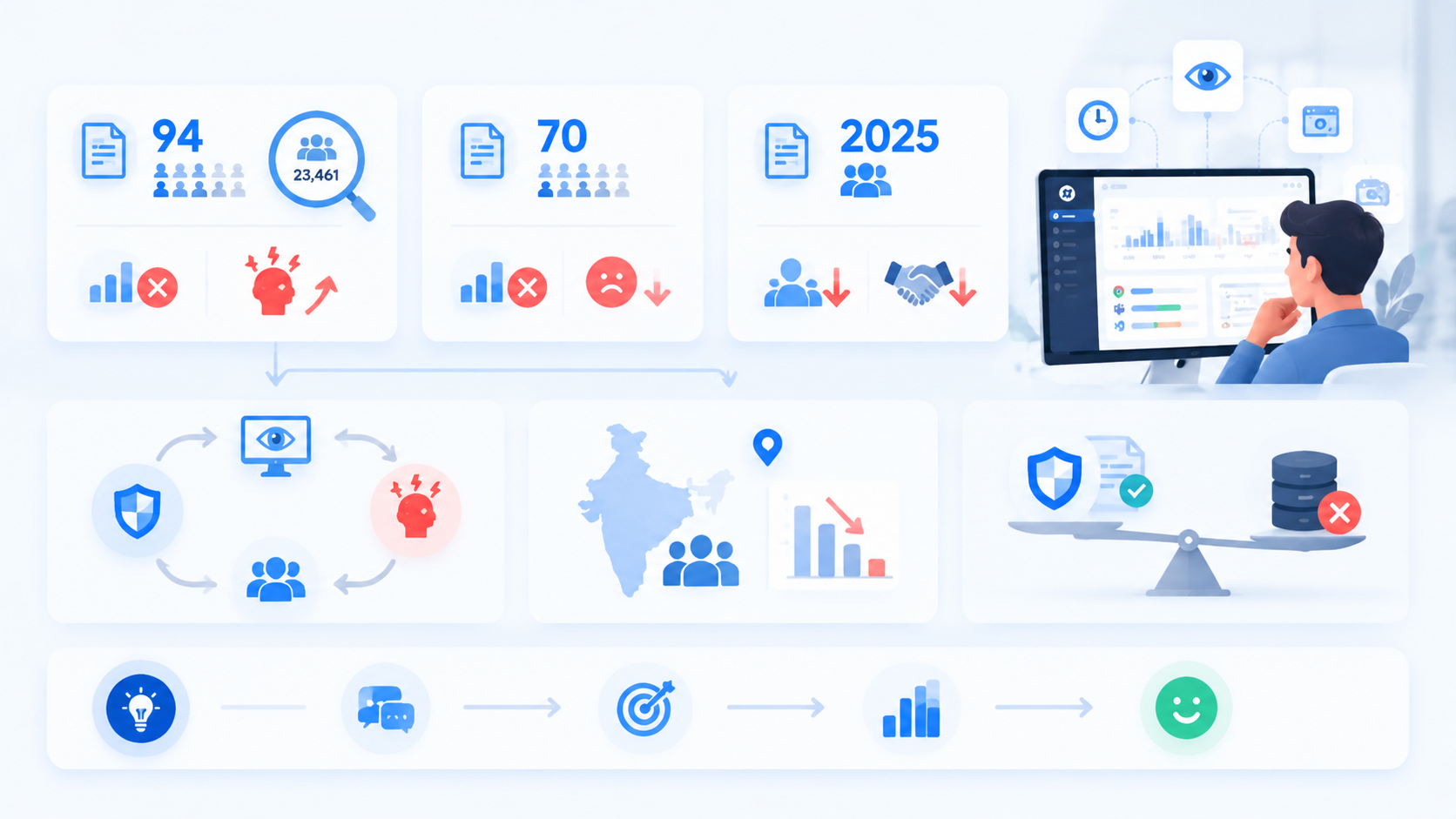
A major meta-analysis published in Personnel Psychology examined 94 independent samples involving 23,461 workers. The researchers found no evidence that electronic performance monitoring improved employee performance. Monitoring was also associated with higher worker stress. At the same time, less invasive and more transparent approaches were associated with more positive employee attitudes.
Another meta-analysis covering 70 independent samples found that electronic monitoring was associated with a small decrease in job satisfaction and a small increase in stress. It also found no meaningful positive relationship between monitoring and employee performance.
More recent research has reinforced the role of trust. A 2025 Journal of Information Systems study examining active employee monitoring found that monitoring negatively affected engagement and job appeal, with perceptions of employer trust playing an important role in that relationship.
These findings do not mean every form of employee monitoring is necessarily harmful.
They do mean that organisations should stop thinking about monitoring as a simple productivity switch.
Monitoring can reduce trust and job satisfaction
Work is partly an economic relationship, but it is also a social relationship.
When an employer introduces detailed monitoring, employees interpret the decision.
They may think:
“Management wants better data about workload.”
Or they may think:
“Management assumes we cannot be trusted unless every action is recorded.”
The technical system may be identical, but the organisational meaning can be very different.
Trust is particularly important because monitoring can create a feedback loop.
Low trust leads management to demand more visibility. More intrusive visibility can make employees feel less trusted. Employees may then become more defensive, less willing to experiment and more focused on appearing busy. Management sees that behaviour as another reason for tighter control.
This creates a cycle in which more data produces less trust rather than better management.
There is also India-specific evidence worth considering. A 2025 cross-industry study of 250 public- and private-sector employees in Punjab reported a negative relationship between digital surveillance and job satisfaction.
Because the study covered one state and a limited sample, it should not be treated as evidence for the entire Indian workforce. However, it is consistent with the broader international research showing that the way monitoring is designed and perceived matters.
Transparency helps, but it is not enough
Transparency is one of the most important principles of responsible employee monitoring. Employees should understand that monitoring exists, why particular data is collected and how that information may be used.
However, transparency alone does not make every form of monitoring appropriate. Research published in 2026 examined whether transparency could reduce the negative consequences of electronic workplace surveillance. It found that transparency can help when monitoring is relatively limited, but may not compensate for practices that are extremely broad or intrusive.
This leads to an important practical principle:
A company should not ask only, “Have we told employees about monitoring?” It should also ask, “Are we collecting more information than we actually need?”
Why Employee Monitoring Can Damage Engagement
Monitoring is more likely to damage engagement when employees experience it as intrusive surveillance rather than as legitimate operational measurement.
Three mechanisms are particularly important.
Loss of autonomy and privacy
Knowledge workers often need a degree of autonomy in how they organise their work.
A developer may spend part of the day thinking through architecture without constant computer activity. An analyst may read documentation. A manager may spend an hour in a meeting. A salesperson may work through calls and conversations that are not reflected in desktop activity.
Problems arise when managers interpret every period of digital inactivity negatively. Employees may begin adapting their behaviour to the monitoring metric rather than focusing on valuable work.
The result is not necessarily higher productivity. It may simply be more visible activity.
Employees may focus on maintaining visible activity, avoid legitimate breaks or prioritise easily measurable tasks over work that is more important but less visible in monitoring data.
Monitoring can signal a lack of trust
Employees do not experience monitoring as a purely technical process. They also interpret why the organisation believes it is necessary.
A narrowly defined time-tracking system introduced to solve a specific working-time or resource-planning problem sends a different message from extensive monitoring that records screens, detailed activity or other employee data without a clearly explained purpose.
As monitoring becomes more intrusive, the need for a clear and legitimate justification becomes stronger. Some forms of monitoring may still be disproportionate even when employees have been informed about them.
Trust therefore depends not only on whether a monitoring policy exists, but also on what is collected, why it is needed, who can access the information and how managers use it.
Activity Metrics Can Create “Productivity Theatre”
Digital activity is attractive because it can be quantified. But what is easy to measure is not always what matters.
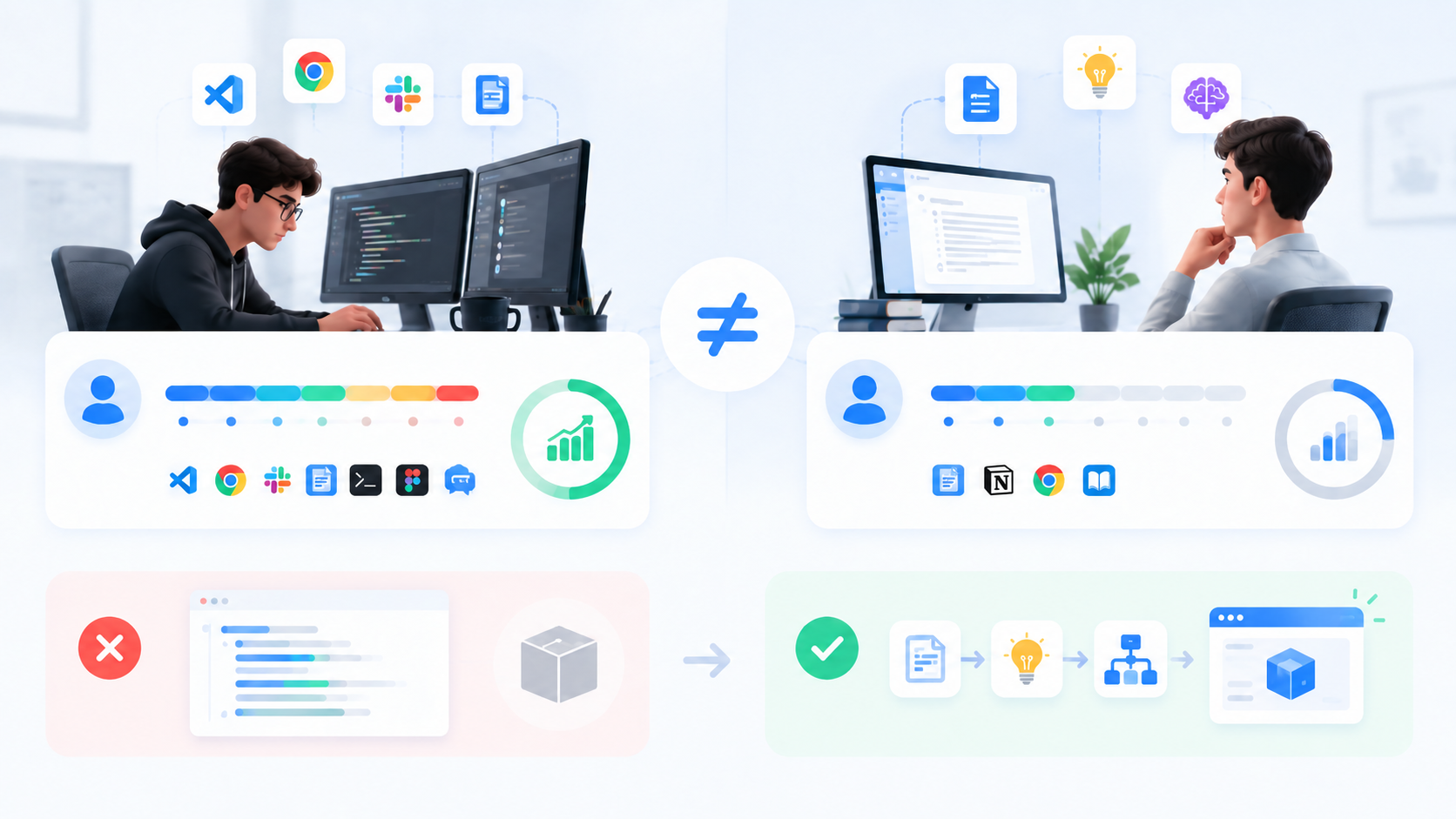
Consider two software developers. Developer A spends six highly active hours moving between an IDE, browser, messaging platform and documentation. Developer B spends part of the day reading technical documentation and thinking through a difficult architecture problem before writing a relatively small amount of code.
A simplistic activity score might make Developer A look more productive, while the actual project outcome may show the opposite.
The same problem exists in marketing, consulting, design, engineering, HR, sales and management.
Monitoring becomes dangerous when an input metric becomes a substitute for the outcome the organisation actually cares about.
When Workforce Data Can Still Help Employees and Managers
If monitoring cannot directly measure engagement, why collect workforce data at all?
Because work-pattern data can still answer useful management questions when interpreted in context.
The purpose should be to identify patterns that deserve investigation, not automate conclusions about people.
Identify Sustained Overtime
A single late evening tells a manager very little. Several weeks of consistent work outside scheduled hours tell a different story.
Possible causes may include:
- excessive workload or understaffing;
- poor prioritisation;
- inefficient processes;
- unrealistic deadlines or temporary project peaks;
- an alternative working arrangement agreed with the employee.
Monitoring data does not diagnose burnout. However, persistent overtime can be an early signal that a manager should investigate workload before the situation becomes more serious.
Find Workload Imbalance
Suppose a department asks to hire additional employees. The request may be completely justified, but management should ideally understand how work is currently distributed before approving or rejecting it.
One team may be consistently working beyond schedule while another has available capacity. A highly experienced employee may be carrying work that could be redistributed, or the apparent overload may be caused by a process bottleneck rather than insufficient headcount.
Working-time, activity and workload data can provide another layer of evidence. The decision should still be considered alongside workload and backlog, task complexity, service or delivery requirements, and relevant quality or business outcomes.
Workforce analytics can support a headcount decision. It should not automatically make that decision.
Investigate Process Friction
Sometimes declining performance is not an employee problem at all.
Employees may be switching between too many systems, waiting for approvals, dealing with unstable software or spending significant time on administrative work.
Application and website usage patterns can help managers understand how digital working time is distributed.
For example, if a project team reports that approvals consume too much time, repeated movement between messaging systems, document platforms and internal applications can help management investigate where the workflow is creating friction.
The right question is not always:
“Which employee is wasting time?”
It may be:
“What process is forcing the team to spend time this way?”
Do Not Measure Engagement With Computer Activity Alone
One of the biggest mistakes organisations can make is trying to derive employee engagement from behaviour that was never designed to measure it.
A better approach combines three types of evidence:
employee voice + work-pattern data + business outcomes.
Each answers a different question.
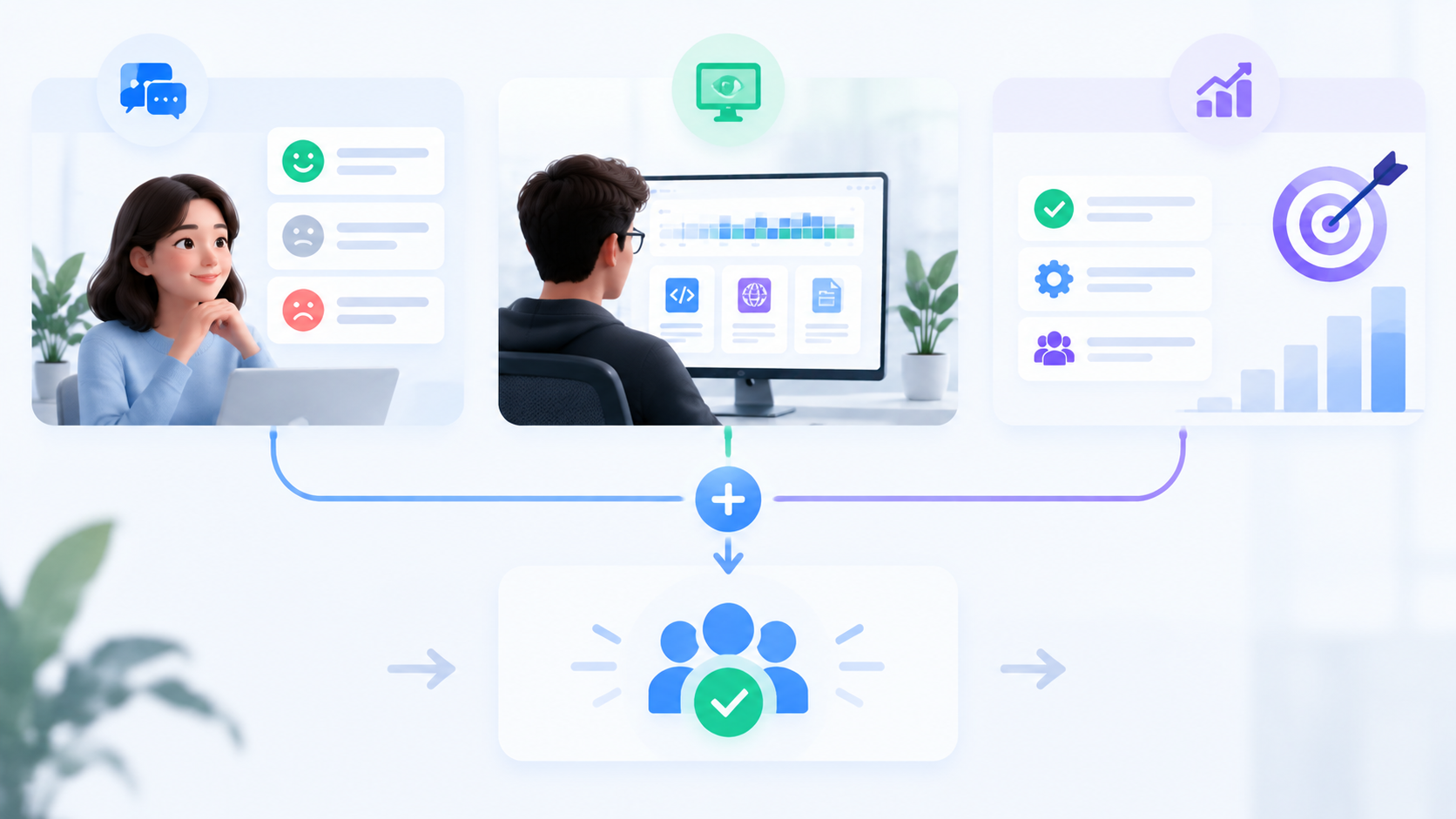
Employee Voice: What Are Employees Experiencing?
Surveys, pulse checks, eNPS, 1:1 meetings and structured manager conversations can reveal experiences that monitoring data cannot.
Employees may say:
“My workload has become difficult to manage.”
“I don't understand how my performance is evaluated.”
“I don't feel trusted.”
These are engagement signals. They cannot be reliably inferred from computer activity, application usage or recorded working time.
Work-Pattern Data: What Appears to Be Happening?
Work-pattern data can help managers examine some of those observations.
If a team reports excessive workload, managers can look for recurring overtime or work outside scheduled hours.
If employees say interruptions make focused work difficult, digital patterns may show frequent switching between tools.
If an employee appears to have long idle periods, the workday timeline may show that those periods coincide with scheduled meetings or other legitimate work away from the computer.
The data does not determine the truth. Its role is to add context.
Business and Task Outcomes: What Was Actually Achieved?
The third layer comes from the systems and indicators that measure work results.
Depending on the organisation, these may include:
- CRM data;
- project milestones and completed tasks;
- customer or service outcomes;
- quality measures;
- revenue or other business KPIs.
These outcomes help prevent digital activity from becoming a standalone performance score.
An employee can show high levels of computer activity while producing weak outcomes. Another may have relatively low visible activity while delivering excellent results.
Good management considers both operational context and actual outcomes.
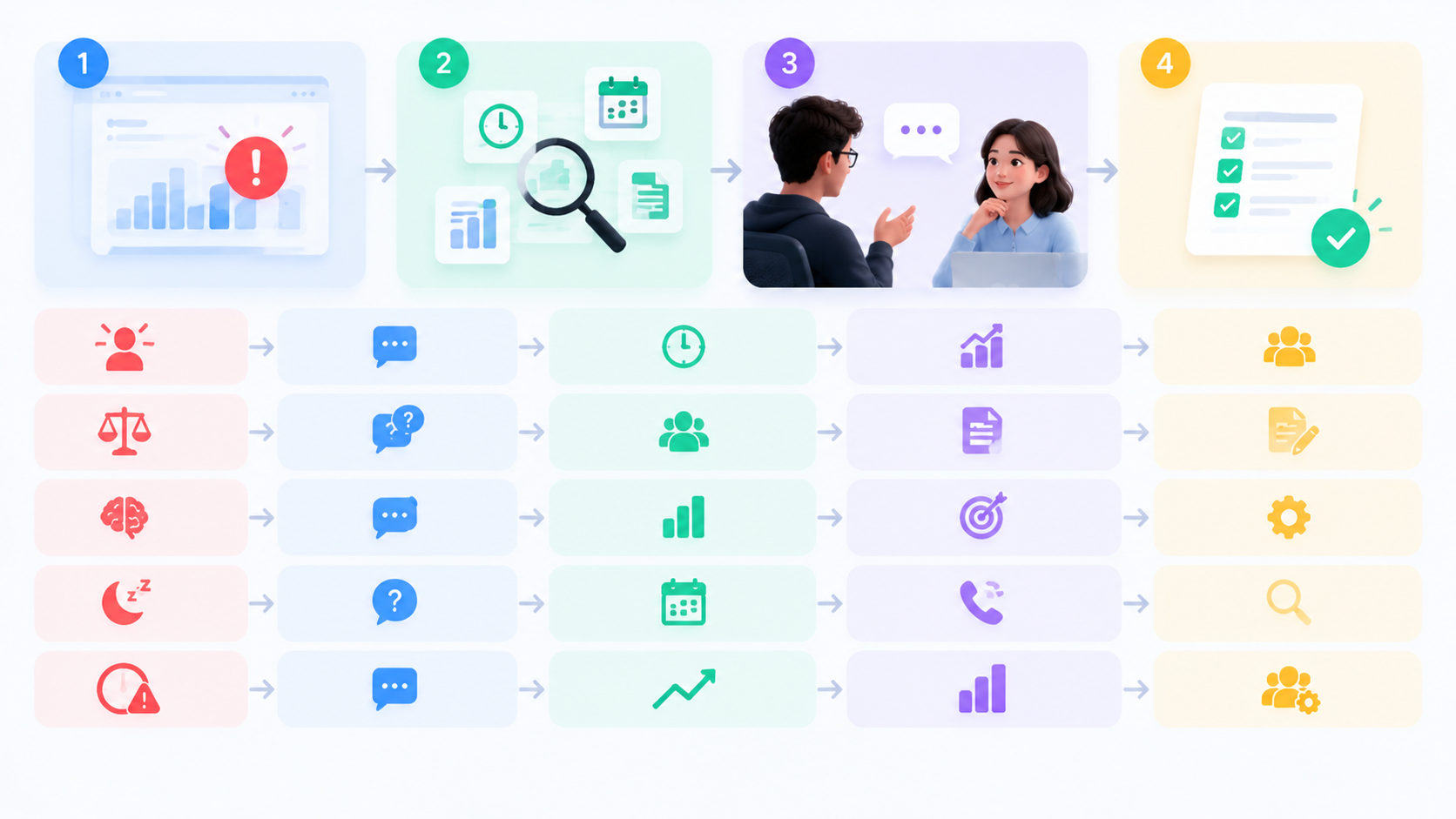
A Practical Framework: Signal → Context → Conversation → Action
A simple management framework can prevent many monitoring mistakes.
Start with a signal rather than a judgement.
Then gather context.
Have a conversation.
Only then take action.
| Employee signal | Ask employees | Check in work-pattern data | Check in business data | Possible management action |
|---|---|---|---|---|
| “We are overloaded” | Workload survey or 1:1 | Sustained overtime, work outside schedule | Backlog, deadlines, service levels | Rebalance workload or priorities |
| “Evaluation is unfair” | Ask which criteria feel unclear | Compare similar roles and patterns | Output and quality metrics | Review evaluation rules |
| Falling focus | Discuss blockers and interruptions | Work fragmentation, repeated non-core activity | Task progress and deadlines | Remove blockers or redesign process |
| Long idle periods | Ask what happened during the period | Timeline, schedules, calendar context | Meetings, calls, field work | Correct the measurement or investigate the process |
| Frequent late work | Ask why work continues after schedule | Overtime trend | Capacity and delivery commitments | Reprioritise work or adjust staffing |
The framework matters because monitoring data usually tells you where to look, not necessarily what happened.
A long idle period may be a meeting.
Repeated late work may reflect flexible working arrangements.
A frequently used website may be essential for one role and irrelevant for another.
A manager who skips the context and conversation stages turns data into surveillance.
A manager who uses the data to test a hypothesis turns it into workforce analytics.
How to Monitor Employees Without Destroying Trust
There is no monitoring configuration that guarantees employee acceptance.
But several principles can significantly reduce unnecessary risk.
Define a Legitimate Purpose
Do not begin with:
“What can our software track?”
Begin with:
“What management problem are we trying to solve?”
Different goals require different kinds of information. Tracking working hours for a distributed team is not the same as investigating a security incident, just as workforce planning requires different data from attendance management.
The clearer the purpose, the easier it becomes to determine what information is actually necessary.
Collect Only What Is Needed
More data does not automatically produce better management information.
If working-time patterns are sufficient to solve the problem, collecting screenshots may add unnecessary privacy risk. If aggregated department-level statistics answer the management question, managers may not need continuous individual-level visibility.
The scope of monitoring should therefore be proportionate to the business problem being addressed.
Explain What Is and Is Not Monitored
Employees should understand the basic rules, including:
- the purpose of monitoring;
- the categories of data collected;
- who may access the information;
- how long it may be retained;
- how it may influence management decisions.
It is equally important to explain what the organisation is not trying to infer.
For example:
“Idle time is not automatically treated as misconduct.”
“Computer activity is not used as a standalone performance score.”
“Work outside the computer should be considered when interpreting the data.”
Clear limits on interpretation can be more meaningful for trust than a generic notice that monitoring software has been installed.
Use Role-Specific Expectations
A universal productivity model rarely reflects how different jobs actually work.
Recruitment specialists may legitimately spend time on LinkedIn. For marketers, social media may be part of the job. Developers may rely on GitHub, documentation sites and development tools. In sales, CRM data and business outcomes may provide more meaningful performance signals than continuous computer activity.
Even within the same company, the same website or application may be productive for one role and irrelevant for another.
Role-specific expectations reduce the risk of false conclusions.
Restrict Access and Retention
Monitoring information can itself become sensitive organisational data.
Not every manager needs access to every employee, screenshot or detailed activity record. Permissions should reflect organisational responsibilities, and organisations should also consider how long detailed monitoring information genuinely needs to be retained.
Keeping data indefinitely simply because storage is available increases privacy and security exposure without necessarily improving management decisions.
Give Employees a Way to Provide Context
A fair monitoring system needs room for correction and explanation.
If the system shows inactivity from 14:00 to 15:00 but the employee was in a client meeting, that context matters. If a website is classified as distracting but is required for a particular role, the classification should be reviewed. If overtime appears because an employee has shifted their schedule, the manager should understand that before drawing conclusions.
The quality of monitoring therefore depends partly on whether employees have a clear way to correct or explain misleading data.
How INSIDER Supports Work-Pattern Analysis
Workforce analytics is most useful when it helps managers investigate specific questions rather than continuously observe individual employees.
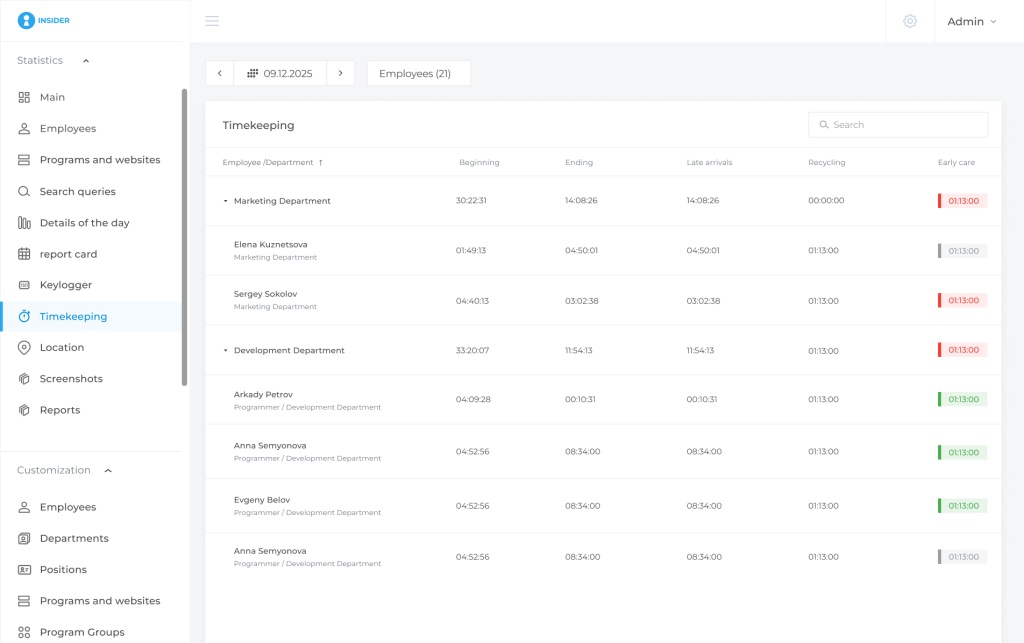
INSIDER can provide this operational context by combining working-time data, schedules, activity patterns and digital workplace analytics.
The system can automatically record the beginning and end of the digital workday, working time, activity, work outside configured schedules and recurring overtime. Managers can compare these patterns with expected schedules to identify periods that may require closer attention.
Workload analysis can combine working time, active and idle periods, overtime and productivity patterns to help identify unusual trends across employees or teams.
Application and website analytics provide additional context about how digital working time is distributed. Productivity profiles can also classify applications and websites differently depending on the employee's role, while day details and reports help managers investigate the specific period behind an unusual metric.
INSIDER does not turn these signals into an automatic judgement about professional performance.
Digital activity does not prove that a task was completed. Idle time does not automatically mean that an employee was not working, and a screenshot provides context for a particular moment rather than evidence of work quality.
Performance should still be assessed together with tasks, deadlines, quality indicators, CRM or project data and the wider management context.
A practical workflow can therefore look like this:
employee feedback → work-pattern data → context review → conversation → management decision
For example, if a team reports excessive workload, INSIDER data can help managers check whether sustained overtime or work outside scheduled hours is actually occurring and whether the pattern is concentrated within particular employees or teams.
The next step is not an automatic “burnout” label. It is a conversation about workload, priorities, capacity and workflow.
Used this way, monitoring data becomes a source of evidence and better questions rather than a substitute for human judgement.
Employee Monitoring and Privacy in India
Employee monitoring raises important questions about privacy, personal data and data governance.
India's framework for digital personal data includes the Digital Personal Data Protection Act, 2023 and the Digital Personal Data Protection Rules, 2025.
The framework is being brought into force in phases, and not all provisions apply at the same time. Organisations should therefore verify which provisions, rules and regulatory requirements are in force when an employee monitoring system is introduced or materially changed.
For employers, the relevant question is not simply whether monitoring is permitted. It is also whether the organisation has a legitimate reason for collecting particular data, whether the scope of monitoring is proportionate to that purpose, and whether the information is appropriately protected and governed.
From a practical perspective, organisations should ask:
- What personal data are we collecting?
- What specific business purpose does each category of data serve?
- Could the same objective be achieved with less intrusive information?
- Who genuinely needs access to detailed employee data?
- How long should the information be retained?
- How will monitoring practices be explained to employees?
- How can employees provide context or challenge misleading interpretations?
- What technical and organisational measures protect the collected information?
The principle of proportionality is particularly important. An organisation that only needs visibility into working hours may not need continuous screenshots or highly detailed activity records. In some cases, aggregated workforce analytics may be sufficient without continuous individual-level monitoring.
Monitoring policies should also address how collected information may be interpreted and used in management decisions, rather than focusing only on what data is technically available.
Because India's data protection framework and its implementation requirements continue to evolve, employers should verify the legislation, rules and regulatory guidance applicable at the time of deployment.
Requirements may vary depending on the organisation, the personal data involved and the specific monitoring practices being used. Appropriate legal advice should be obtained when designing employee monitoring policies and data-processing procedures.
Before You Roll Out Monitoring: 10 Questions for Management
Before introducing employee monitoring across an organisation, management should be able to answer ten practical questions:
- What specific business problem are we trying to solve?
Define the objective clearly, such as working-time visibility, workload management, attendance, security or process efficiency. - Which data is genuinely necessary?
Start with the least intrusive information capable of addressing the problem. - What cannot be concluded from the data?
Document important limitations. Activity does not automatically equal performance, and idle time does not necessarily mean an employee is not working. - Do different roles require different expectations?
Avoid applying one definition of productive activity to developers, recruiters, salespeople, designers and other roles with different working patterns. - How will employees be informed?
Explain the purpose of monitoring, the categories of data collected, who can access it, how long it is retained and how it may be used. - Who genuinely needs access to the data?
Limit access according to organisational responsibilities. - How can employees provide context or correct misleading data?
Create a clear process for explaining meetings, offline work, classification errors or unusual working arrangements. - Which business outcomes will be considered alongside monitoring data?
Use relevant measures such as CRM results, project delivery, service metrics, quality indicators or operational KPIs. - How long should monitoring data be retained?
Retention should serve a defined purpose rather than simply preserve as much historical data as possible. - How will we know whether monitoring is actually helping?
Review the system after a pilot period and assess not only productivity indicators, but also employee feedback, trust, workload, manager behaviour, process improvements and the quality of management decisions.
A controlled pilot is often more informative than a company-wide rollout based on assumptions.
Conclusion: Use Monitoring to Ask Better Questions, Not to Automate Judgement
Employee monitoring and employee engagement should not be treated as a simple cause-and-effect relationship.
Research provides little support for the idea that monitoring itself improves engagement or performance. Intrusive monitoring can increase stress, reduce job satisfaction and weaken trust.
At the same time, reliable work-pattern data can help managers understand overtime, workload distribution, process friction and other operational patterns, particularly in remote, hybrid and distributed teams.
What matters most is how the data is interpreted and used.
A stronger management model combines:
employee voice + work-pattern data + business outcomes → context → conversation → management action.
Monitoring should provide evidence for that process. It should help managers identify where to look, ask better questions and test assumptions.
It should not replace human judgement.
Frequently asked questions
Does Employee Monitoring Improve Employee Engagement?
Not automatically.
Research suggests that intrusive monitoring can reduce engagement or job satisfaction when employees experience it as controlling or as a signal that their employer does not trust them.
Monitoring data can still help managers identify workplace conditions that may affect engagement, such as sustained overtime or workload imbalance. What happens next depends on management practices rather than the monitoring system itself.
Does Employee Monitoring Damage Trust?
It can.
Trust is an important factor in how employees respond to monitoring. Transparent and proportionate monitoring is generally less problematic than extensive or intrusive surveillance, but transparency alone cannot make every level of monitoring appropriate.
Can Employee Monitoring Detect Burnout?
No monitoring tool should be treated as a burnout diagnostic system.
Sustained overtime, repeated work outside normal schedules or significant changes in working patterns may be signals worth investigating, but burnout requires broader human and organisational assessment.
Can Employee Monitoring Increase Job Satisfaction?
Monitoring itself should not be expected to increase job satisfaction.
It may help managers identify workload imbalance, inefficient processes or excessive overtime and provide evidence for improving working conditions. At the same time, intrusive monitoring can negatively affect job satisfaction.
How Can Managers Monitor Employees Without Micromanaging Them?
Start with a specific business purpose, collect only the data needed for that purpose, analyse patterns rather than isolated events, use role-specific expectations, explain monitoring clearly, restrict access and allow employees to provide context.
Monitoring should remain one source of management information rather than becoming a continuous behavioural score.
Should Employers Tell Employees They Are Being Monitored?
Transparency is an important ethical and management principle and may also be relevant to applicable legal requirements.
Employees should understand what categories of data are collected, why the organisation collects them, who can access the information and how it may be used.
Is Employee Monitoring Legal in India?
There is no universal yes-or-no answer for every form of employee monitoring.
The legal position depends on the type of data collected, the purpose and method of processing, and the data protection requirements applicable to the organisation.
India's DPDP framework has been introduced through phased commencement, so employers should verify which provisions, rules and regulatory requirements are in force when a monitoring system is deployed or materially changed.
Organisations should obtain appropriate legal advice for their specific monitoring practices.
Can Employee Activity Be Used to Measure Productivity?
Employee activity can provide part of the picture, but computer activity should not be treated as the same thing as professional productivity.
Productivity ultimately depends on relevant outcomes such as completed work, quality, deadlines, customer results, project delivery or other business KPIs.
Activity data is most useful as additional context.
Is Idle Time Evidence That an Employee Is Not Working?
No.
Idle periods may correspond to meetings, calls, offline work, physical tasks or time spent thinking through a problem.
They should therefore be treated as signals that require context rather than automatic evidence of poor performance or misconduct.
What Is the Difference Between Employee Monitoring and Employee Surveillance?
The terms overlap, but they often carry different implications.
Employee monitoring generally refers to collecting work-related data for purposes such as working-time management, workload analysis, productivity analytics or security.
Employee surveillance is more commonly associated with monitoring that becomes extensive, continuous or highly intrusive.
In practice, the distinction depends on the purpose of monitoring, the scope of data collection, the level of intrusion and how the organisation uses the information.